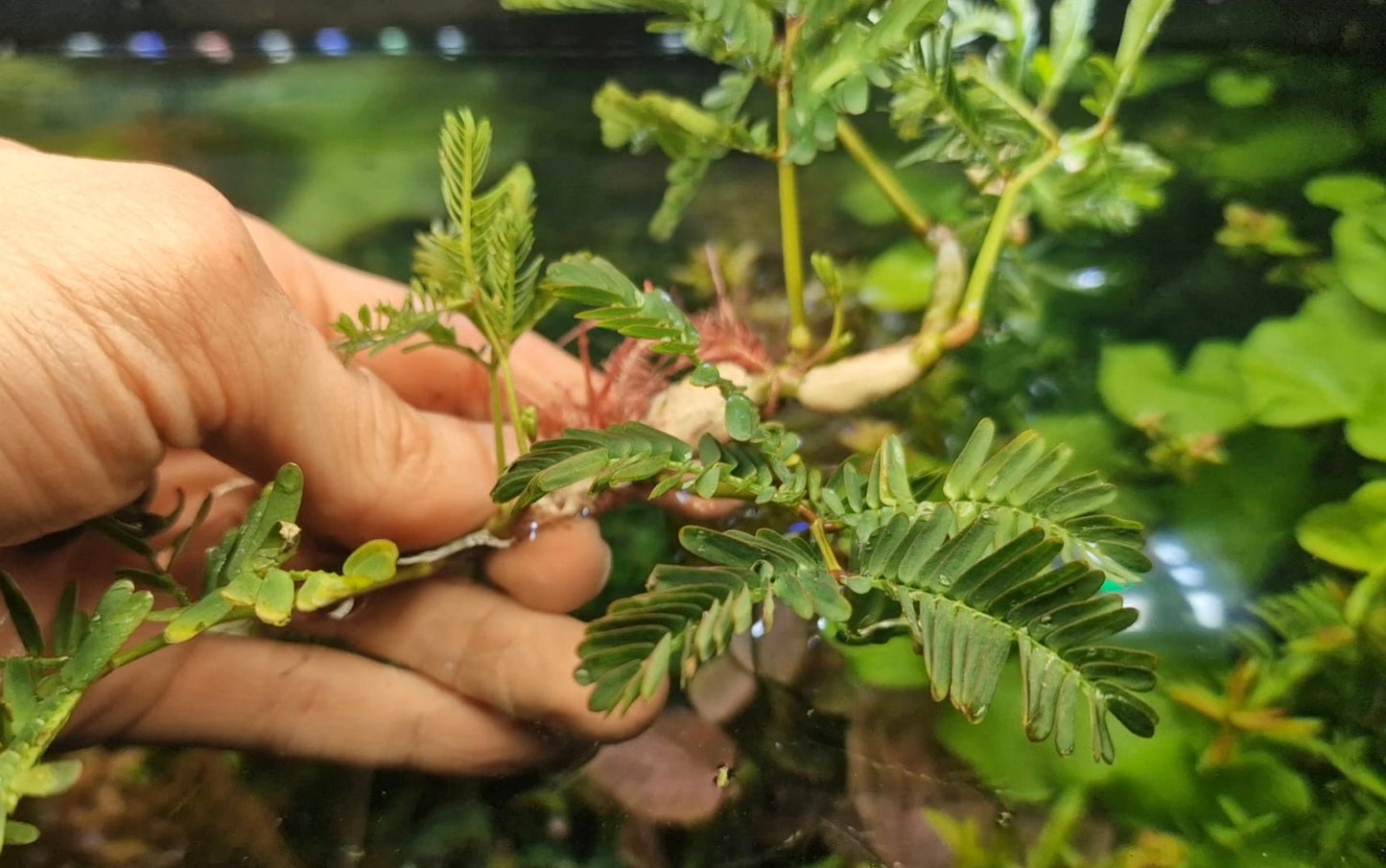
Water Mimosa (Neptunia oleracea) rare plants aquarium 1 pcs
Water Mimosa (Neptunia oleracea) rare plants aquarium 1 pcs
Couldn't load pickup availability
Water Mimosa (Neptunia oleracea) rare plants aquarium 1 pcs
Water Mimosa (Neptunia oleracea)
---
English
Botanical description & leaf morphology
Neptunia oleracea is a floating or semi-emergent aquatic legume with delicate, feathery, bipinnate leaves. Each leaf is composed of numerous small, soft leaflets arranged symmetrically along a central rachis, creating a light and airy texture. The foliage shows a bright to medium green coloration with a subtle natural sheen. Stems are spongy and buoyant due to well-developed aerenchyma tissues, allowing the plant to float naturally on the water surface. Under optimal conditions, it produces small, spherical, pale yellow flower heads.
Cultivation & growth
Light: Medium to high
Temperature: 22–30 °C
Placement: Floating or lightly anchored in shallow water
CO₂: Not required
Growth rate: Fast, noticeably faster than most floating aquatic plants
Neptunia oleracea thrives in warm, nutrient-rich water and responds quickly to good lighting with vigorous, lush growth.
Rarity & availability
While not rare in its natural tropical habitats, Neptunia oleracea is considered rare and uncommon in the European aquarium trade. It is seldom found in standard aquarium shops and usually appears only through limited or seasonal imports, making it a sought-after plant among collectors and enthusiasts.
Special notes & curiosities
Its naturally floating stems are a rare adaptation among aquatic plants. In Southeast Asia, this species is also known as an edible aquatic vegetable.
Why choose it
An excellent choice for creating a natural, tropical surface layout. Its rapid growth helps absorb excess nutrients while providing soft shade and movement. A distinctive and unusual plant that stands out immediately.
---
Italiano
Descrizione botanica e morfologia fogliare
La Neptunia oleracea è una pianta acquatica galleggiante o semi-emersa con foglie finemente bipennate, leggere ed eleganti. Le numerose foglioline, morbide e regolarmente disposte lungo la nervatura centrale, conferiscono un aspetto piumoso e arioso. Il colore varia dal verde chiaro al verde medio con una lieve lucentezza naturale. I fusti sono spugnosi e ricchi di tessuti aeriferi, caratteristica che consente alla pianta di galleggiare spontaneamente. In condizioni ideali produce piccoli fiori sferici di colore giallo pallido.
Coltivazione e crescita
Luce: Media–alta
Temperatura: 22–30 °C
Posizionamento: Galleggiante o leggermente ancorata
CO₂: Non necessaria
Velocità di crescita: Rapida, più veloce della maggior parte delle piante galleggianti
Predilige acque calde e ricche di nutrienti, mostrando una crescita vigorosa con illuminazione adeguata.
Rarità e disponibilità
Pur non essendo rara in natura nelle zone tropicali, la Neptunia oleracea è considerata rara e poco comune nel commercio acquariofilo europeo. È difficilmente reperibile nei negozi tradizionali e compare quasi esclusivamente tramite importazioni limitate, rendendola molto ricercata dagli appassionati.
Curiosità
I suoi fusti naturalmente galleggianti rappresentano un adattamento insolito tra le piante acquatiche. In Asia sud-orientale è anche utilizzata come pianta alimentare.
Perché sceglierla
Perfetta per creare un’atmosfera tropicale naturale, offre ombreggiatura, movimento e un forte impatto visivo. Una pianta fuori dal comune, ideale per chi cerca qualcosa di diverso.
---
Français
Description botanique et morphologie foliaire
Neptunia oleracea est une plante aquatique flottante ou semi-émergée aux feuilles très fines et bipennées. Les petites folioles, disposées de manière symétrique le long d’un axe central, donnent un aspect léger et plumeux. Le feuillage est vert clair à vert moyen avec une légère brillance. Les tiges spongieuses, riches en tissus aérifères, assurent une excellente flottabilité. En bonnes conditions, la plante produit de petites inflorescences sphériques jaune pâle.
Culture et croissance
Lumière: Moyenne à forte
Température: 22–30 °C
Position: Flottante ou légèrement enracinée
CO₂: Non nécessaire
Vitesse de croissance: Rapide, plus rapide que la majorité des plantes flottantes
Elle apprécie les eaux chaudes et nutritives et se développe rapidement.
Rareté et disponibilité
Bien que commune dans son milieu naturel tropical, Neptunia oleracea est considérée comme rare dans le commerce aquariophile européen et reste difficile à trouver, principalement disponible via des importations limitées.
Particularités
Plante connue pour ses tiges flottantes naturelles et son usage alimentaire traditionnel en Asie du Sud-Est.
Pourquoi la choisir
Idéale pour un rendu exotique et naturel, elle apporte volume, douceur et dynamisme à la surface de l’eau.
---
Deutsch
Botanische Beschreibung & Blattmorphologie
Neptunia oleracea ist eine schwimmende oder halb emerse Wasserpflanze mit sehr fein gefiederten, doppelt gefiederten Blättern. Die kleinen, weichen Fiederblättchen sind gleichmäßig entlang einer Mittelachse angeordnet und verleihen der Pflanze ein luftiges Erscheinungsbild. Die Blattfarbe reicht von hellem bis mittlerem Grün mit leichtem Glanz. Die schwammartigen Stängel enthalten luftgefülltes Gewebe und sorgen für natürliche Schwimmfähigkeit. Unter optimalen Bedingungen erscheinen kleine, kugelige, hellgelbe Blüten.
Pflege & Wachstum
Licht: Mittel bis hoch
Temperatur: 22–30 °C
Platzierung: Schwimmend oder leicht fixiert
CO₂: Nicht erforderlich
Wachstumsgeschwindigkeit: Schnell, schneller als die meisten Schwimmpflanzen
Ideal für warme, nährstoffreiche Gewässer und offene Aquarien.
Seltenheit & Verfügbarkeit
Obwohl sie in tropischen Regionen nicht selten ist, gilt Neptunia oleracea als selten und ungewöhnlich im europäischen Aquarienhandel und ist nur sporadisch erhältlich.
Besonderheiten
Eine außergewöhnliche Wasserpflanze mit natürlichem Auftrieb, die auch als essbare Pflanze bekannt ist.
Warum diese Pflanze?
Sie verleiht dem Aquarium oder Teich eine exotische, natürliche Atmosphäre und ist ein echter Blickfang für Liebhaber seltener Pflanzen.